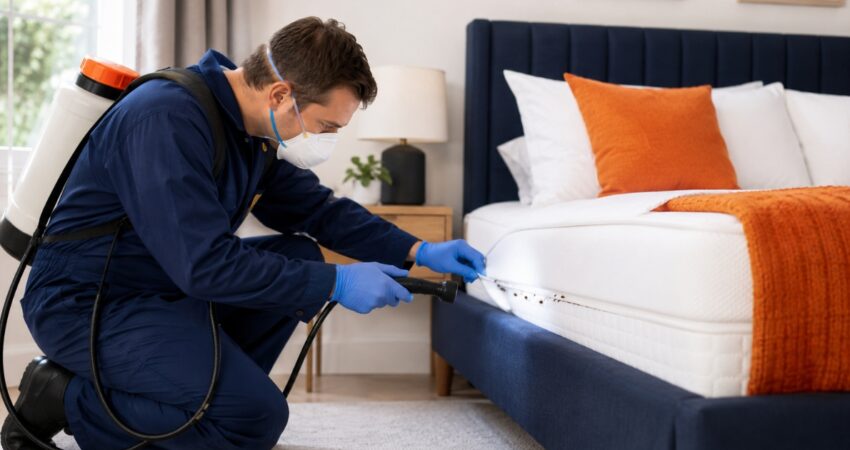
Search online for how to get rid of bed bugs and you’ll find no shortage of advice, some useful, plenty of it not. Bed bugs are a genuinely difficult pest to eliminate on your own, and understanding why home remedies fall short is the first step toward actually solving the problem.
Why DIY Methods Rarely Finish the Job
Heat and cold can both kill bed bugs. Washing bedding at high temperatures, or exposing infested items to sustained freezing cold, does have a real effect on the insects themselves. The problem isn’t that these methods don’t work in isolation, it’s that they rarely reach every hiding spot in a property. Bed bugs settle into cracks, seams, skirting boards, and voids behind furniture, places a washing machine or a freezer bag simply can’t reach.
Store-bought sprays face a similar limitation. Surface-level insecticides can kill bed bugs on contact, but they don’t penetrate deep into the crevices where the bulk of an infestation typically hides. That means a spray might reduce what you can see while leaving the source of the problem untouched, only for it to reappear days or weeks later, often larger and more established than before. The longer this cycle continues, the more it tends to affect the eventual bed bug removal cost, since a spread-out infestation simply takes more time and treatment to resolve than one caught early.
Common Bed Bug Myths That Don’t Actually Work
A few home remedies circulate online with real confidence behind them, despite having little to back them up.
Vinegar and baking soda is one of the most repeated suggestions, and one of the least effective. There’s no meaningful evidence this combination does anything to eliminate bed bugs, despite how often it’s recommended.
Table salt is another common myth, sometimes suggested as a barrier sprinkled around furniture and door frames. Not only does this fail to repel bed bugs, it can also damage flooring and furniture in the process, leaving you with a second problem on top of the first.
If a remedy sounds too simple for a pest known to survive extreme conditions and resist many insecticides, it’s worth being sceptical.
Interesting Facts About Bed Bugs
A few genuinely useful things to know about how bed bugs behave:
- They’re most active around 3 a.m., which is often when bites happen without anyone noticing
- A single female can lay several eggs per day, which is why infestations grow quickly if left untreated
- Bed bugs are drawn to the carbon dioxide people give off while sleeping
- They can survive for many months without feeding, which is why isolating an infested item rarely solves the problem on its own
- Some bed bug populations have developed resistance to common insecticides, which is part of why DIY treatment often underperforms
Preventing Bed Bugs From Entering Your Home
Prevention is far easier than treatment. One of the most common ways bed bugs enter a home is through secondhand furniture. A sofa, bed frame, or mattress picked up from the street or a secondhand shop can carry an infestation without any obvious signs. If you’re bringing used furniture into your home, inspect it thoroughly first, checking seams, joints, and the underside of cushions before it ever enters a bedroom or living space.
Why Professional Chemical Treatment Works Where DIY Doesn’t
This is really the core issue with most home remedies: they treat what’s visible rather than the full infestation. Professional bed bug treatment is built around a proper inspection first, identifying every affected area rather than just the room where the problem was first noticed.
At Bed Bugs East London, our bed bug chemical treatment uses certified, professional-grade products designed to reach the cracks, voids, and hidden spaces that sprays from a shop shelf can’t penetrate. Because the treatment targets bed bugs at every stage of their life cycle, eggs included, it addresses the infestation at its source rather than just reducing what’s visible on the surface.
If you’re trying to find the best bed bug treatment for your situation, the honest answer is that it depends on the scale of the infestation, but a proper inspection is always the right starting point. Our bed bug pest control service is available for homes, flats, and rental properties across East London, with a clear plan built around your property rather than a generic, one-size-fits-all approach.
When to Stop DIY and Call a Professional
If you’ve tried cleaning, washing bedding at high temperatures, or a shop-bought spray and the problem keeps coming back, that’s usually a sign the infestation has spread further than the treated area. At that point, continuing to try DIY fixes often just delays the inevitable, and gives the infestation more time to establish itself further.
Bed Bugs East London provides thorough, professional treatment across East London, with same-day appointments where available. Get in touch for an inspection and a straightforward plan to deal with the problem properly.
Frequently Asked Questions
Can heat or cold alone get rid of a bed bug infestation? They can kill bed bugs they come into direct contact with, but rarely reach every hiding spot in a property, which is why infestations often return after DIY heat or cold treatment alone.
Do bed bug sprays from shops actually work? They can kill bed bugs on contact, but most don’t penetrate deep enough into cracks and voids to eliminate a full infestation, especially once bed bugs have spread beyond a single area.
Is it true some bed bugs are resistant to insecticides? Yes, certain bed bug populations have developed resistance to some common insecticides over time, which is one reason professional-grade treatment often succeeds where shop-bought products don’t.
How can I avoid bringing bed bugs into my home? Be cautious with secondhand furniture, and inspect items thoroughly, particularly seams, joints, and cushions, before bringing them into a bedroom or living space.
When should I call a professional instead of continuing DIY treatment? If signs of bed bugs persist after cleaning, washing bedding, or using a shop-bought spray, it’s a strong indication the infestation has spread beyond what DIY methods can reach.