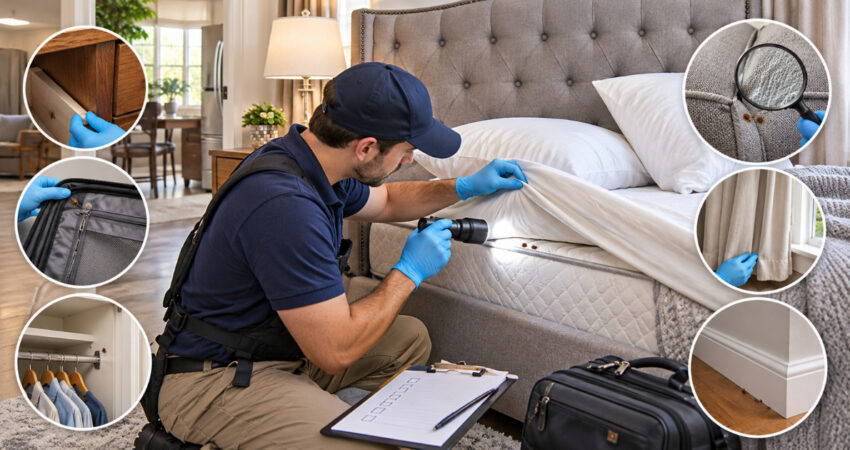
Bed bugs can hide in places you rarely check. You might notice a small insect near your bed, dark marks on the sheets or unexplained bites after sleeping. However, these clues do not always confirm an infestation.
A thorough bed bug inspection checklist helps you examine the right areas before deciding what to do next.
Bed bugs often stay close to sleeping areas, but they can also hide in furniture, fabric seams and narrow gaps. They do not need a dirty home to survive. Even a clean and well-maintained property can develop an infestation.
This guide explains how to inspect different rooms, recognise reliable warning signs and decide when you need professional bed bug treatment.
What Should You Check Before Starting a Bed Bug Inspection?
Start by gathering a few simple items. You do not need specialist equipment for an initial visual inspection.
Useful items include:
- A bright torch to examine dark spaces
- A magnifying glass for small insects or eggs
- A white sheet of paper to improve visibility
- Your phone to photograph suspected evidence
- A small, secure container for collecting an insect sample
- A notebook to record where you find suspicious signs
Inspect one area at a time. Avoid moving furniture or belongings between rooms if you suspect an infestation.
If you find an unfamiliar insect, collect a sample where you can do so safely. A pest control professional can help confirm its identity.
Bedroom Inspection: Start With the Sleeping Area
Bedrooms deserve your closest attention because bed bugs often hide near people while they sleep.
Begin with visible surfaces. Then examine accessible seams, joints and gaps.
Check Mattress Seams and Edges
Use a torch to inspect the mattress carefully.
Pay particular attention to:
- Piping along the mattress edges
- Fabric seams and stitching
- Labels and handles
- Folds around mattress corners
- Accessible gaps near the mattress base
Look for live insects, tiny pale eggs, shed skins and dark spotting.
Do not immediately throw away the mattress if you discover suspicious signs. Bed bugs may also occupy the surrounding bed structure.
For a more detailed mattress assessment, read our guide on what to inspect for bed bugs on mattresses before replacing your bed.
Examine Bed Frames and Headboards
A mattress inspection does not cover every possible hiding place.
Use your torch to check accessible joints, screw holes and connecting sections of the bed frame.
Inspect upholstered headboards around fabric seams and attachment points.
Avoid dismantling large furniture without professional advice. Disturbing potentially infested items can make the inspection harder to manage.
Look Around Bedside Furniture
Bedside cabinets sit close to sleeping areas, making them relevant inspection points.
Check accessible drawer joints, undersides and furniture connections.
Do not transfer drawers or belongings into another room while investigating possible bed bug activity.
Record any unusual findings and continue with the remaining bedroom areas.
Living Room Inspection: Sofas and Upholstered Furniture
Bed bugs do not live exclusively in bedrooms.
A sofa or armchair may also provide suitable hiding spaces, especially when someone regularly sleeps or rests there.
Inspect the following areas:
- Cushion seams and fabric folds
- Gaps between cushions and frames
- Accessible joints beneath seating
- Upholstery attachment points
- Nearby furniture used for resting
Focus on places that offer narrow shelter.
Finding an insect on a sofa does not automatically confirm a bed bug infestation. Other insects can look similar.
Try to obtain a clear photograph or secure sample before choosing a treatment.
Guest Rooms and Other Sleeping Areas
Guest bedrooms can contain hidden bed bug activity even when people use them less frequently.
Inspect the mattress, headboard and bed frame using the same approach as the main bedroom.
Pay attention to luggage storage areas and upholstered furniture near the bed.
If guests recently stayed in the room, ask whether they noticed insects or unusual marks. However, do not rely on bite reports alone.
Some people show little or no visible reaction to bed bug bites.
Other Rooms: When Is Inspection Necessary?
Bed bugs usually concentrate around sleeping and resting areas.
You do not need to dismantle every room simply because you suspect an infestation.
However, a wider inspection may make sense when:
- Someone regularly sleeps in another room
- You discover insects away from the bedroom
- You have moved potentially infested belongings
- Bed bug activity continues after treatment
- A professional identifies evidence of wider activity
Focus on evidence rather than searching every household object without a clear reason.
A targeted approach can help prevent unnecessary disturbance.
How to Recognise Signs of Bed Bugs in Your House
Some warning signs provide stronger evidence than others.
Live Bed Bugs
Adult bed bugs have small, flat, oval bodies. Their colour usually ranges from brown to reddish-brown.
They cannot fly or jump, but they can crawl across accessible surfaces.
Young bed bugs can be much smaller and lighter in colour.
Other household insects may resemble bed bugs, so accurate identification matters.
Dark Spots and Stains
Bed bug droppings can leave small dark marks on bedding, mattresses and nearby surfaces.
These marks may appear around seams or protected hiding places.
Not every dark spot comes from bed bugs. Examine the surrounding area for additional evidence.
Shed Skins
Bed bugs shed their outer covering as they develop.
You may find pale, empty skins near established hiding places.
Several shed skins in a protected area can provide useful evidence of bed bug activity.
Bed Bug Eggs
Bed bug eggs are small, pale and difficult to see without close inspection.
Females may deposit eggs in protected areas near other signs of activity.
An inspection should consider eggs alongside live insects, shed skins and dark spotting.
Unexplained Bites
Bed bug bites may cause itchy bumps or skin irritation.
However, bite appearance varies between individuals.
Some people develop noticeable reactions, while others show few visible symptoms.
Bites alone cannot confirm bed bugs. Look for physical evidence or request professional identification.
How to Record Evidence During Your Inspection
A simple inspection record can help you communicate with a pest control specialist.
Use the following table to organise your findings.
| Area | What to Check | Finding |
| Mattress | Seams, corners, piping | Live insects, eggs, spotting |
| Bed frame | Joints and screw holes | Hidden insects, shed skins |
| Headboard | Fabric folds and fittings | Insects or dark marks |
| Bedside cabinet | Drawer joints and undersides | Insects or other evidence |
| Sofa | Cushion seams and frame gaps | Insects, spotting, skins |
| Guest bedroom | Bed and nearby furniture | Any confirmed activity |
Photograph suspicious areas before disturbing them.
Note the date and location of each sighting.
If you find the same type of evidence in several locations, tell the technician before treatment begins.
What Should You Do If You Find Bed Bugs?
Finding a bed bug does not mean you need to discard your furniture immediately.
Start with a few controlled steps.
Confirm the insect. Capture a clear photograph or collect a sample for identification.
Avoid transferring belongings. Moving potentially infested furniture and fabrics between rooms can spread insects.
Keep affected items contained. Follow professional advice when handling bedding, clothing and other belongings.
Do not spray random chemicals. Incorrect insecticide use can create safety risks and may fail to reach hidden insects.
Contact a specialist. Professional advice can help you determine whether treatment is necessary.
Avoid sleeping in a different room solely to escape suspected bed bugs. This may encourage activity in another sleeping area.
Can Cleaning Help Before Professional Treatment?
Cleaning can support bed bug management, but it does not always remove an established infestation.
Vacuuming may remove some accessible insects and debris.
Hot laundering can help treat suitable bedding and clothing. The NHS recommends washing affected items at 60°C and using a hot tumble-dryer cycle for at least 30 minutes where the fabric allows.
Handle potentially infested laundry carefully. Follow the technician’s preparation instructions before moving or washing items.
Do not assume that ordinary vacuuming, household cleaning products or natural repellents will eliminate insects hidden inside furniture.
You may still need professional bed bug pest control.
When Should You Arrange Professional Bed Bug Treatment?
Consider professional help when you confirm live bed bugs or discover repeated signs of activity.
A specialist can assess the infestation and identify areas that require attention.
You should also seek advice when:
- You find insects in several hiding places
- Bed bug activity continues over several days
- You discover evidence in more than one sleeping area
- You cannot identify the insect confidently
- Previous attempts have failed to control the problem
Early assessment can help you avoid unnecessary furniture disposal and unsuitable treatment methods.
How Professional Bed Bug Treatment Works
Professional bed bug treatment starts with understanding where insects are active.
A technician reviews the evidence, inspects relevant areas and selects suitable control measures.
At Bed Bugs East London, we provide professional chemical bed bug treatment for affected properties.
Identifying Treatment Areas
The technician examines confirmed and suspected hiding places.
Inspection findings help determine which locations need treatment.
Not every surface requires insecticide application.
Applying Suitable Chemical Treatments
Professional chemical treatment uses appropriate insecticidal products according to their authorised instructions.
The technician selects application areas based on the infestation, the product and the surface involved.
Chemical products must only be applied to surfaces permitted by their labels.
Reviewing Treatment Progress
Some insects may remain hidden after an initial application.
Bed bug eggs can also present treatment challenges.
A technician may recommend further inspection or treatment depending on the infestation and products used.
Follow the preparation, re-entry and aftercare instructions provided for your property.
Learn more about our professional bed bug removal service in East London.
How to Reduce the Risk of Another Bed Bug Infestation
Bed bugs often enter properties through belongings or furniture.
Good hygiene supports general home maintenance, but cleanliness alone cannot prevent every infestation.
Practical precautions include checking second-hand furniture before bringing it indoors, examining luggage after suspected exposure and staying alert to new signs around sleeping areas.
Keep bedrooms accessible enough to inspect furniture and mattress seams.
If you previously received treatment, follow the monitoring advice from your pest control technician.
These precautions may help you identify activity earlier, but they cannot guarantee that bed bugs will never return.
Frequently Asked Questions
How can I tell if my house has bed bugs?
Look for live insects, dark spotting, shed skins and small pale eggs around sleeping areas. Bites alone cannot confirm an infestation. A professional can help identify uncertain evidence.
Where should I look for bed bugs first?
Start with mattress seams, bed frame joints and headboards. Then check accessible hiding places in nearby furniture. Inspect other sleeping areas when evidence suggests wider activity.
Can bed bugs live in a clean house?
Yes. Bed bugs can infest clean and untidy properties. They mainly need access to a blood meal and suitable hiding places.
Can I get rid of bed bugs by cleaning?
Cleaning may remove some accessible insects, but it often cannot reach hidden bed bugs or eggs. An established infestation may require professional treatment.
Should I throw away my mattress if I find bed bugs?
Not automatically. A professional assessment can help determine whether the mattress is suitable for treatment or needs replacement.
Does professional bed bug treatment require more than one visit?
It may. The infestation, treatment method and products used determine whether you need additional visits. Follow the technician’s recommendations.
Professional Bed Bug Help in East London
A careful home inspection can help you recognise bed bug activity before the problem becomes harder to manage.
Start with sleeping areas, document suspected evidence and avoid moving potentially infested belongings unnecessarily.
If you confirm bed bugs or continue finding suspicious signs, a professional assessment can help you choose an appropriate next step.
Need professional bed bug treatment in East London?
Contact Bed Bugs East London to discuss your concerns and learn about suitable chemical treatment options for your property.