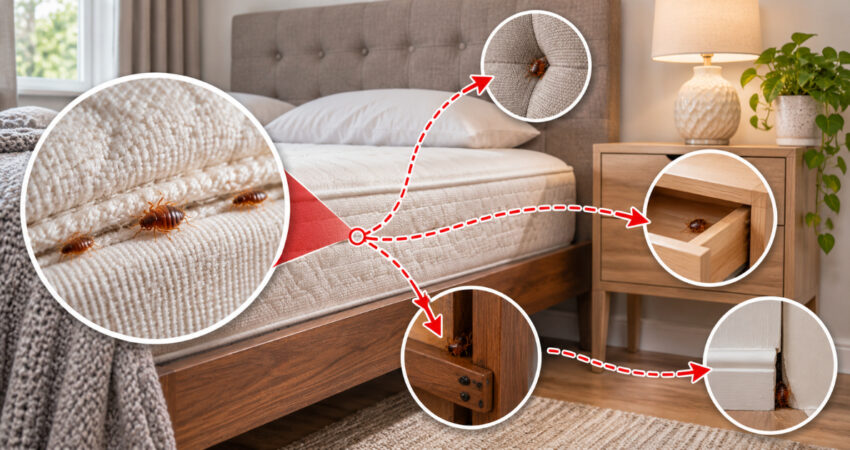
Finding bed bugs on your mattress can be worrying. However, the insects you see may represent only part of the problem. Bed bugs can also hide in bed frames, headboards, bedside furniture and narrow gaps around the bedroom.
Understanding how bed bugs spread from mattresses to surrounding hiding places can help you recognise a wider infestation and avoid common treatment mistakes.
Bed bugs cannot fly or jump. They move by crawling between feeding locations and protected hiding places. Although you may notice them on a mattress first, they could already be living in nearby furniture.
For homeowners and tenants in East London, knowing where these insects hide is an important step towards effective bed bug control.
How Do Bed Bugs Spread from Mattresses?
Bed bugs move between places where people sleep and areas that provide shelter.
A mattress may be one of these locations, but it is not necessarily where an infestation began.
Bed bugs often remain concealed during the day. When they need to feed, they may crawl towards someone sleeping before returning to a protected hiding place.
As an infestation develops, additional insects may occupy nearby areas.
Common bedroom hiding places include:
- Mattress seams and fabric folds
- Bed frame joints and screw holes
- Upholstered headboards
- Bedside cabinets and drawers
- Cracks around skirting boards
- Gaps behind nearby furniture
Finding bed bugs in several locations does not prove they travelled directly from the mattress. Some insects may have been hiding in those areas before the infestation was discovered.
This is why a wider bedroom inspection is important.
Why Do Bed Bugs Move Beyond the Mattress?
Several factors can influence how bed bugs use different hiding places around a bedroom.
1. Increasing Bed Bug Activity
Bed bugs prefer narrow, protected spaces where they can remain undisturbed.
As their numbers increase, they may begin occupying additional suitable hiding places.
For example, insects initially discovered around a mattress may also be present in a nearby bed frame joint or upholstered headboard.
However, finding bed bugs in both locations does not establish which area became infested first.
2. Access to Sleeping People
Bed bugs feed on blood and often remain close to places where people rest.
A headboard, bedside table or bed frame may provide shelter while allowing insects to reach someone sleeping nearby.
The mattress itself does not need to contain an established group of bed bugs for someone to be bitten.
3. Furniture Positioned Close to the Bed
Bedroom furniture can provide accessible routes between different hiding places.
For example, a bedside cabinet touching a bed frame may allow insects to crawl between connected surfaces.
Similarly, a headboard positioned against a wall may provide access to narrow spaces behind it.
4. Disturbance and Movement of Belongings
Moving infested furniture, bedding or stored belongings can accidentally transport bed bugs.
This may introduce insects into another bedroom or an area that was previously unaffected.
Moving items without checking them can therefore make an existing infestation more difficult to manage.
Where Do Bed Bugs Hide Around a Mattress?
Bed bugs can shelter in several parts of the sleeping area. Understanding these locations helps explain why inspecting only the mattress may overlook hidden insects.
Bed Frames and Wooden Joints
Bed frames often contain screw holes, connecting joints and narrow gaps.
These protected spaces can provide suitable shelter for bed bugs.
Insects may crawl between the mattress and accessible parts of the bed frame while searching for a feeding location or hiding place.
A detailed inspection should therefore consider the surrounding bed structure.
Upholstered Headboards
Fabric-covered headboards can contain folds, seams and concealed joints.
These areas may provide hiding places close to sleeping people.
Depending on the construction, bed bugs may shelter behind fabric panels or within accessible gaps.
Headboards can be particularly difficult to examine when hiding places are not immediately visible.
Bedside Tables and Drawers
Bedside cabinets may also provide suitable shelter.
Bed bugs can hide around drawer joints, connecting panels and other narrow gaps.
Finding insects in bedside furniture may indicate that the infestation involves more than the mattress.
However, a single sighting cannot confirm when the insects reached that location.
Skirting Boards and Nearby Wall Gaps
Bed bugs may also shelter in narrow cracks around walls and skirting boards.
These spaces can be difficult to inspect when furniture is positioned directly against them.
A professional assessment can help identify which nearby areas require closer examination.
Does Finding Bed Bugs in Bedroom Furniture Mean the Infestation Is Spreading?
Not necessarily.
If you discover bed bugs in a bedside cabinet or headboard, the insects may have moved there recently. Alternatively, they may have remained hidden for some time.
One sighting cannot reliably establish the direction or timing of movement.
However, certain observations may suggest that additional areas are affected:
- Repeated bed bug sightings in several bedroom locations
- Insects discovered in furniture away from the mattress
- Bed bug activity continuing after an initial treatment
- Insects appearing in another bedroom
- Multiple hiding places showing signs of activity
Recording where insects are found can help a pest control technician assess the extent of the problem.
Can Moving Bedroom Furniture Spread Bed Bugs?
Yes. Moving infested furniture can accidentally transport live bed bugs or eggs to another location.
For example, carrying an affected bedside cabinet into another bedroom may introduce insects into a previously unaffected area.
Similar risks can occur when moving a bed frame, mattress or other infested belongings.
If you suspect bed bugs, avoid moving potentially affected furniture between rooms without appropriate precautions.
Do not assume an item is free from bed bugs simply because no insects are immediately visible.
Why Treating Only the Mattress May Not Work
When people discover bed bugs on their mattress, they often focus entirely on that surface.
However, the visible insects may represent only part of the infestation.
Bed bugs may already be hiding inside bed frame joints, headboards, nearby furniture or structural gaps.
If these areas remain untreated when treatment is needed, surviving insects may continue feeding and reproducing.
Replacing the mattress alone may also fail to resolve the problem because insects can remain elsewhere in the bedroom.
Before replacing your mattress, it is important to check whether bed bugs are also hiding in the surrounding bed structure.
Read our guide on what to inspect for bed bugs on mattresses before replacing your bed to understand which signs to look for.
An effective bed bug treatment plan should consider the wider sleeping area rather than focusing only on visible insects.
This does not mean every item requires chemical application. Treatment decisions should depend on inspection findings and the authorised uses of the products selected.
How Professional Chemical Treatment Helps Control Bed Bugs
Professional chemical bed bug treatment aims to control insects in affected areas using suitable insecticidal products.
At Bed Bugs East London, we provide professional chemical treatment for bed bug infestations in residential and commercial properties.
A suitable treatment approach considers where insects have been found and which nearby hiding places may require attention.
1. Inspecting the Affected Bedroom Areas
A technician examines areas associated with possible bed bug activity.
This may include:
- Mattress seams and surrounding surfaces
- Bed frame joints and connecting areas
- Headboards and accessible fabric folds
- Bedside furniture
- Relevant cracks and nearby structural gaps
Understanding the room layout helps identify likely hiding places and areas requiring closer inspection.
2. Identifying Suitable Treatment Locations
Chemical treatment should focus on appropriate areas based on the infestation and the selected product.
Different surfaces require different considerations.
Mattresses, upholstered furniture and other materials should only receive chemical treatment when the product’s authorised instructions specifically permit that use.
3. Applying Professional Chemical Products
Suitable insecticides may be applied to relevant hiding areas according to their labels and applicable UK safety requirements.
Depending on the approved product, treatment may involve suitable cracks, joints or other accessible harbourages.
Using more insecticide does not automatically produce better results.
Correct product selection, application and adherence to safety instructions are essential.
4. Monitoring the Treatment Results
Some bed bugs may remain concealed after an initial treatment.
Eggs can also present challenges, depending on the products used.
A technician may recommend monitoring, follow-up inspection or further treatment based on the infestation and treatment plan.
The number and timing of visits should depend on the products used, treatment findings and professional recommendations.
Learn more about our professional bed bug removal service in East London.
What Should You Avoid When Bed Bugs Are Hiding Beyond the Mattress?
Certain actions may make a bedroom infestation harder to control.
Avoid Moving Potentially Infested Furniture
Moving affected furniture between rooms may accidentally transfer bed bugs or eggs into other areas.
Seek appropriate advice before relocating suspected items.
Do Not Immediately Replace Your Mattress
Removing the mattress does not necessarily eliminate insects hiding in nearby furniture or bed frame joints.
A wider assessment may be needed before deciding whether replacement is necessary.
Avoid Using Random Household Insecticides
Household sprays may fail to reach concealed hiding places.
Products used incorrectly or on unauthorised surfaces can also create safety risks.
Always follow product instructions and seek professional guidance when necessary.
Follow Professional Treatment Instructions
Cleaning treated surfaces too early may interfere with some residual chemical treatments.
Follow the technician’s preparation, re-entry and aftercare instructions, which depend on the products used and areas treated.
When Should You Contact a Professional Bed Bug Specialist?
Consider arranging a professional assessment if:
- Bed bugs appear in multiple areas of the same bedroom.
- You repeatedly discover insects around bed frames or furniture.
- Bed bugs are found in another room.
- Activity continues after previous treatment.
- You cannot identify where the insects are hiding.
A professional inspection can help determine which areas are affected and whether additional treatment is necessary.
Addressing the problem early may make an infestation easier to manage before more hiding places become involved.
Professional Bed Bug Treatment in East London
Bed bugs can remain hidden in mattresses, bed frames, headboards and surrounding furniture.
As a result, an infestation may extend beyond the first location where insects were discovered.
Bed Bugs East London provides professional chemical bed bug treatment for affected properties.
Our approach focuses on assessing the infestation, identifying relevant hiding places and recommending suitable treatment solutions.
Whether you have discovered bed bugs around your mattress or in nearby furniture, professional guidance can help you understand the next steps.
Need Professional Bed Bug Treatment in East London?
If you have found bed bugs beyond your mattress, contact Bed Bugs East London to discuss your infestation and available treatment options.
Frequently Asked Questions
Can bed bugs spread from a mattress to a bedside table?
Yes. Bed bugs can crawl between beds and nearby furniture. Bedside tables may contain narrow gaps that provide suitable shelter. However, finding insects in both locations does not establish where the infestation began.
Can bed bugs hide inside a headboard?
Yes. Bed bugs may shelter in headboard seams, joints and narrow spaces. Upholstered headboards can provide concealed hiding places near sleeping people.
Can moving a bed frame spread bed bugs?
Yes. Moving an infested bed frame may accidentally transport live insects or eggs to another location. Check suspected items and seek professional advice before moving them.
Will replacing my mattress eliminate bed bugs?
Not necessarily. Bed bugs may already be hiding in bed frame joints, headboards, nearby furniture or structural gaps. Replacing the mattress alone may leave the infestation unresolved.
Can professional chemical treatment control bed bugs in bedroom furniture?
Yes. Suitable professional chemical treatments can help control bed bugs in affected furniture and surrounding hiding places when the products are authorised for those surfaces and applied correctly.
Conclusion
Understanding how bed bugs spread from mattresses to nearby bedroom hiding places can help you recognise when an infestation involves more than the bed itself.
Bed bugs may shelter in headboards, bed frame joints, bedside furniture and narrow gaps around sleeping areas.
Finding insects in several locations calls for a wider assessment rather than treating only the mattress.
Professional inspection, appropriate chemical treatment and follow-up where necessary can help control affected areas and reduce ongoing bed bug activity.
For professional bed bug advice and treatment in East London, contact Bed Bugs East London.