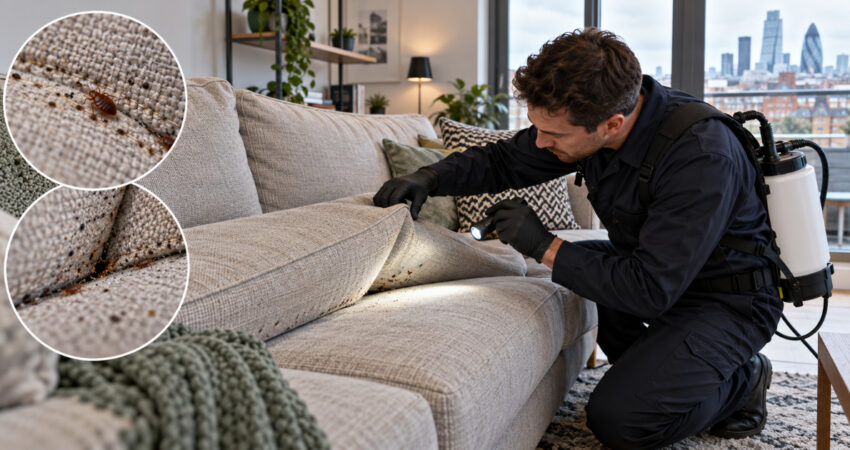
You sit on your sofa every evening. You watch television, relax after work, or sometimes fall asleep there.
Then one day, you notice a small insect near a cushion.
Could it be a bed bug?
Most people associate bed bugs with mattresses and bedrooms. But these insects can also hide inside sofas, upholstered chairs and other furniture.
Bed bugs in sofas can remain unnoticed because their hiding places are difficult to see. Finding them early helps you understand how far an infestation may have spread.
If you live in East London, knowing what to look for can help you decide when to seek professional help. Our bed bugs treatment East London service can help you address suspected infestations in your home.
Here’s where bed bugs hide, how to recognise the signs and what to do next.
Can Bed Bugs Really Live in Sofas?
Yes. Bed bugs can hide in sofas and other upholstered furniture.
They prefer small, protected spaces close to people. Sofas provide plenty of these places.
The insects can shelter in fabric seams, wooden joints, cushion folds and narrow gaps inside the frame.
They usually emerge to feed when a person remains nearby.
You do not need to sleep on a sofa for bed bugs to appear there.
A sofa may become infested when insects arrive through luggage, second-hand furniture or belongings. Bed bugs can also spread from another affected area of the property.
This is why checking only the mattress may not reveal the full extent of an infestation.
Where Do Bed Bugs Hide in a Sofa?
Bed bugs are small and flat. This allows them to fit into narrow spaces.
When inspecting a sofa, pay particular attention to these areas.
1. Cushion Seams and Fabric Folds
Start with the edges of each cushion.
Look along stitched seams, piping and folded fabric.
These areas offer protected hiding places that may be difficult to see without a torch.
Lift removable cushions carefully and inspect both sides.
2. Underneath the Sofa
The underside of a sofa often contains fabric coverings, wooden supports and joints.
These areas can provide hiding places for bed bugs.
Check accessible edges and the points where different materials meet.
Do not tear away fixed fabric or dismantle the structure without professional advice.
3. The Sofa Frame
Bed bugs may hide in narrow gaps around wooden or metal components.
Pay attention to corners, joints and fixing points.
A sofa can look completely clean on the outside while insects remain hidden inside its structure.
4. Nearby Furniture and Skirting Boards
Bed bugs do not always remain inside the sofa.
They may also shelter behind nearby furniture, along skirting boards or inside cracks close to where people sit.
If you find signs around the sofa, inspect the surrounding area without moving potentially infested belongings into another room.
Signs of Bed Bugs in Living Room Furniture
Finding one mark does not automatically confirm an infestation.
Look for several signs together.
Small Dark Spots
Bed bugs can leave dark faecal marks around their hiding places.
These may appear near seams, underneath cushions or around furniture joints.
The marks can look like tiny dark dots.
Shed Skins
Young bed bugs shed their outer skins as they develop.
You may find pale, translucent skins around protected hiding places.
Live Bed Bugs
Adult bed bugs are small, flat and reddish-brown.
They can be difficult to spot, especially when hidden inside furniture.
Use a torch and inspect slowly.
Blood Marks on Fabric
Small reddish marks may appear when a recently fed bed bug gets crushed.
However, stains alone do not prove that bed bugs are present.
Unexplained Bites
Some people notice itchy bites after spending time on an affected sofa.
Others may have little or no visible reaction.
Bites alone cannot identify a bed bug infestation because other insects and skin conditions can produce similar symptoms.
Look for physical evidence or arrange a professional inspection.
Can Bed Bugs Spread From a Sofa to the Bedroom?
Yes. Bed bugs can move between areas of a property.
They may travel through furniture, belongings or nearby hiding places.
Moving an infested cushion, blanket or sofa into another room can also carry insects with it.
This creates a problem when someone notices bed bugs and starts moving furniture around the house.
For example, a family may find insects in the bedroom and decide to sleep on the living room sofa.
That change can expose another area to bed bug activity.
If you suspect an infestation, avoid moving potentially affected items unnecessarily.
Bed bugs can also hide in mattresses, bed frames, and nearby furniture. If you have noticed suspicious signs in your bedroom, read our guide to bed bugs on mattresses to learn what to inspect before deciding whether to replace your bed.
A pest control technician can help determine which rooms and furniture need inspection.
For more information about bedroom infestations, read our guide to bed bugs on mattresses and what to inspect before replacing the bed.
What Should You Do If You Find Bed Bugs in Your Sofa?
Finding bed bugs in your furniture can be stressful.
You may want to throw the sofa away immediately or spray everything with a shop-bought product.
Neither should be your automatic first step.
Start with these practical actions.
Avoid Moving the Sofa
Do not move suspected infested furniture into another room.
This may spread the insects to previously unaffected areas.
Check for Physical Evidence
Use a torch to inspect accessible seams, cushion edges and the surrounding furniture.
If you find an insect, capture it safely in a sealed container or take a clear photograph for identification.
Avoid Random Chemical Spraying
Using several insecticides without identifying the problem can create unnecessary risks.
Some products may not reach insects hidden deep inside furniture.
Only use products approved for the intended application and follow their labels.
Do not apply insecticides directly to upholstery unless the product specifically permits it.
Keep the Area Accessible
Avoid adding clutter around the affected furniture.
Your pest controller may need access to the sofa frame, nearby skirting boards and other hiding places.
Follow professional instructions before removing covers or washing items.
Arrange an Inspection
If you find live insects or several signs of activity, contact a qualified pest control professional.
An inspection helps establish whether bed bugs are present and which areas require attention.
Our bed bug removal service in East London can help you explore inspection and treatment options for affected furniture and surrounding rooms.
The bed bug removal service in East London can help you discuss inspection and treatment options for affected furniture and surrounding rooms.
How Does Professional Bed Bug Treatment Work for Sofas?
Professional bed bug treatment begins with identifying the pest and assessing the affected areas.
A technician may inspect sofa seams, accessible framework, surrounding furniture and nearby cracks.
The inspection helps determine whether the infestation is limited to one area or extends elsewhere.
The treatment approach depends on the findings.
Suitable methods may include targeted insecticide applications, steam treatment or other professional techniques.
Not every product or method is suitable for every sofa.
Fabric type, furniture construction and product safety instructions must guide the decision.
Some infestations also require follow-up visits because eggs or hidden insects may survive an initial treatment.
A professional pest controller should explain the proposed treatment, preparation requirements, safety precautions and follow-up arrangements.
If you have an appointment scheduled, our guide on what to do before professional bed bug treatment explains how to prepare your property.
Should You Throw Away a Sofa With Bed Bugs?
Not always.
Discovering bed bugs in a sofa does not automatically mean you need to replace it.
Some upholstered furniture can receive appropriate professional treatment.
The decision depends on the extent of the infestation, the sofa’s condition and whether technicians can access the relevant hiding places.
Replacing furniture before treating the infestation may not solve the problem.
Bed bugs could still remain in nearby cracks, skirting boards or other furniture.
A new sofa may then become exposed to the same infestation.
Before disposing of furniture, ask your pest control technician whether removal is necessary and how to prevent insects from spreading during disposal.
Can Bed Bugs Hide in Offices and Other Commercial Seating?
Yes. Bed bugs can reach places beyond residential bedrooms.
They may arrive in offices, waiting rooms, communal lounges and other settings through personal belongings or furniture.
However, finding an insect near commercial seating does not automatically mean the entire building is infested.
Accurate identification comes first.
A professional inspection can help establish whether bed bugs are present and identify the areas that need attention.
For businesses, clear reporting and a suitable treatment plan can help minimise unnecessary disruption.
Bed Bugs East London provides pest control support for residential and commercial properties across East London.
Frequently Asked Questions
1. Can bed bugs live in a sofa without a bed nearby?
Yes. Bed bugs can shelter in upholstered furniture even when there is no bed in the same room.
They are attracted to opportunities to feed and suitable hiding places.
2. How do I know if my sofa has bed bugs?
Check accessible cushion seams, folds, joints and the underside of the sofa.
Look for live insects, shed skins and dark faecal marks.
If you’re unsure, arrange professional identification rather than relying on bites alone.
3. Can I remove bed bugs from a sofa myself?
Cleaning and careful inspection may help identify activity, but established infestations are difficult to eliminate through DIY methods alone.
Bed bugs may remain hidden inside the furniture or nearby structures.
Professional treatment may be necessary.
4. Will bed bug treatment damage my sofa?
That depends on the treatment method and the material.
A qualified technician should check the furniture’s construction and select an appropriate method.
Not every insecticide, steam process or heat treatment suits every upholstery material.
5. Do I need to replace my sofa after bed bug treatment?
Not necessarily.
Some sofas can remain in use following suitable treatment and inspection.
Follow your pest controller’s instructions before using treated furniture again.
Get Professional Bed Bug Pest Control in East London
Bed bugs do not limit themselves to mattresses.
They can hide in sofas, chairs, furniture joints and other small spaces around the home.
If you find suspicious signs, avoid moving furniture or applying random insecticides.
An accurate inspection can help identify the problem and determine the next steps.
Bed Bugs East London provides professional bed bug pest control and removal services for homes, flats and commercial properties.
Whether you have discovered insects in your sofa or suspect activity elsewhere in your property, contact our team to discuss your concerns.
Explore our professional bed bug removal services or contact Bed Bugs East London to request assistance.