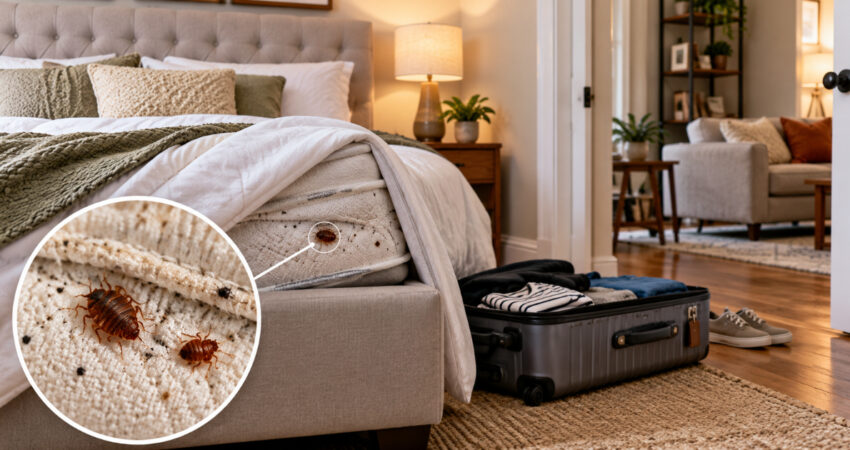
Bed bugs can appear in almost any property, including clean, well-maintained homes. They do not develop because of dirt or poor hygiene. Instead, they usually enter a property through infested luggage, furniture, clothing or other belongings.
Bed bugs often reach UK homes after travelling, buying second-hand furniture or bringing affected belongings indoors. In blocks of flats, they can also spread between neighbouring properties through structural gaps.
Understanding what causes bed bugs can help you identify possible sources, recognise warning signs and reduce the risk of further infestation.
If you are dealing with bed bugs in London, UK, understanding how they enter your property can help you take action before the infestation spreads.
What Are Bed Bugs?
Bed bugs are small, flat insects that feed on blood. The common bed bug, Cimex lectularius, is the species most often associated with homes in the UK.
Adults are typically around 5 mm long, with oval bodies and brown or reddish-brown colouring.
Unlike fleas, bed bugs cannot jump or fly. They crawl between surfaces and often remain hidden during the day.
They usually shelter close to sleeping or resting areas, making beds, headboards and upholstered furniture common hiding places.
What Causes Bed Bugs in UK Homes?
Bed bugs do not suddenly appear from dust, moisture or dirty bedding.
An infestation begins when insects or their eggs enter a property from an affected location.
Several everyday activities can accidentally introduce them into your home.
1. Bringing Bed Bugs Home After Travelling
Bed bugs can hide in hotels, holiday accommodation and other places where people sleep.
They may enter suitcases, backpacks or personal belongings without being noticed.
After returning home, they can move into bedrooms and furniture.
To reduce the risk:
- Inspect luggage after travelling.
- Keep suitcases away from beds when possible.
- Check clothing before putting it into wardrobes.
- Wash suitable travel clothing at 60°C.
- Check seams and pockets for signs of insects.
These precautions are particularly useful after staying somewhere with suspected bed bug activity.
2. Buying Infested Second-Hand Furniture
Used furniture can introduce bed bugs into a property.
Sofas, mattresses, upholstered chairs and bed frames offer plenty of narrow hiding places.
Even furniture that appears clean may contain insects inside seams or joints.
Before bringing second-hand furniture indoors:
- Inspect upholstery and stitching.
- Examine wooden joints and screw holes.
- Check the underside of the furniture.
- Look for dark spotting or shed skins.
- Avoid discarded mattresses or sofas of unknown origin.
A visual inspection reduces risk but cannot guarantee that furniture is free from bed bugs.
3. Bed Bugs Spreading Between Neighbouring Flats
Bed bugs may travel between adjoining flats in apartment buildings and converted houses.
They can move through small structural gaps, particularly where properties share walls or service routes.
Possible entry points include:
- Cracks around walls and floors.
- Gaps near skirting boards.
- Openings around pipework.
- Voids around electrical fittings.
- Shared spaces and moved belongings.
This issue can be especially challenging in blocks of flats and shared accommodation across East London.
If several neighbouring properties show signs of infestation, coordinated inspection may be necessary.
Learn more about how bed bugs spread between flats and the steps residents can take to reduce the risk.
4. Carrying Bed Bugs on Clothes and Personal Belongings
Bed bugs do not normally live on people like head lice.
However, they can occasionally travel inside bags, folded clothing and other belongings.
Items stored in affected rooms may carry insects into a new property.
Avoid moving suspected infested belongings without checking and containing them first.
5. Introducing Bed Bugs Through Visitors
Visitors do not automatically bring bed bugs into your home.
However, bags, luggage or belongings from an infested environment may occasionally carry insects.
The risk comes from the affected items rather than personal cleanliness.
Why Do Bed Bugs Appear in Clean Houses?
One common misconception is that bed bugs only affect dirty properties.
In reality, they can appear in clean homes, hotels, rental accommodation and newly furnished flats.
Bed bugs seek a blood meal, not household dirt.
They use signals such as body heat and carbon dioxide to locate people.
Good hygiene can make it easier to notice signs of infestation, but cleaning alone cannot prevent insects from arriving on belongings.
Clutter can also provide extra hiding places and make professional treatment more difficult.
Where Do Bed Bugs Hide After Entering Your Home?
Once inside a property, bed bugs often settle near places where people sleep.
Common hiding places include:
- Mattress seams and labels.
- Bed frames and headboards.
- Divan bases and storage beds.
- Sofas and upholstered chairs.
- Bedside cabinets.
- Skirting boards and floor gaps.
- Cracks in nearby furniture.
- Areas behind loose wallpaper.
Their flat bodies allow them to squeeze into small spaces.
This behaviour can make an infestation difficult to detect during its early stages.
How Do You Know If Bed Bugs Have Entered Your Home?
Early detection helps you take action before the infestation spreads.
Common warning signs include:
Live insects: Small, flat, brown bugs around sleeping areas.
Dark spots: Bed bug droppings on mattresses, bed frames or furniture.
Blood marks: Small stains on bedding.
Shed skins: Pale or brownish insect shells near hiding places.
Bite reactions: Itchy marks that may appear in groups or lines.
Bites alone cannot confirm a bed bug infestation. Other insects and skin conditions can cause similar marks.
Try to find physical evidence before deciding which pest is responsible.
Can Bed Bugs Spread From Person to Person?
Bed bugs do not normally transfer directly between people through ordinary contact.
They are more likely to travel on bags, luggage, furniture or other belongings.
This means visiting someone with a bed bug infestation does not automatically mean you will bring insects home.
However, checking personal items and avoiding contact with affected furniture can help reduce the risk.
How Can You Reduce the Risk of Bed Bugs?
No home is completely protected from bed bugs, but a few simple habits can reduce the chances of introducing them.
- Inspect second-hand furniture before bringing it indoors.
- Check luggage after travelling.
- Wash potentially affected textiles at appropriate temperatures.
- Keep storage areas organised.
- Inspect beds and upholstered furniture when you notice suspicious signs.
- Avoid moving infested items into unaffected rooms.
- Report possible infestations promptly in shared accommodation.
Early inspection is particularly important when bed bugs may have moved between neighbouring flats.
What Should You Do If You Find Bed Bugs?
If you suspect an infestation, begin by checking the bed frame, mattress seams and surrounding furniture.
Avoid immediately throwing away mattresses or moving furniture into other rooms. These actions can spread insects unnecessarily.
You should also avoid repeatedly applying DIY insecticides without professional advice.
Professional pest controllers can assess affected areas and determine an appropriate chemical treatment plan.
If you need professional bed bug pest control in London, Bed Bugs East London provides targeted chemical treatment for residential and commercial properties.
Professional Bed Bug Control in East London
Bed bug infestations can affect houses, flats, shared accommodation and commercial premises.
Whether insects entered through luggage, furniture or an adjoining property, identifying the extent of the infestation is an important first step.
Bed Bugs East London provides professional chemical treatment to help manage bed bug activity across East London.
A technician can inspect likely hiding places, assess treatment requirements and explain the preparation and follow-up process.
Concerned about bed bugs in your property?
Contact Bed Bugs East London to discuss the signs you have noticed and arrange appropriate treatment.
Frequently Asked Questions
What causes bed bugs to suddenly appear?
Bed bugs usually enter a home through infested luggage, furniture, clothing or personal belongings. They may remain hidden before someone notices them.
Do bed bugs come from dirty houses?
No. Bed bugs are not caused by poor hygiene. Clean homes can become infested when insects enter from another location.
How do bed bugs start in a bedroom?
An infestation can begin when a bed bug enters on luggage, furniture or belongings. Once established, bed bugs may hide near the bed and reproduce.
Can you get bed bugs from another person’s clothes?
It is possible for bed bugs to travel on clothing or personal belongings, although they do not usually remain on a person’s body.
Can bed bugs travel between flats?
Yes. They can sometimes move between adjoining properties through structural gaps or on belongings carried between rooms and flats.
Do bed bugs fly or jump?
No. Bed bugs move by crawling and can travel between locations when carried inside belongings.
What should I do if I find a bed bug at home?
Keep the insect for identification if possible, inspect nearby hiding places and avoid moving affected furniture. Contact a professional pest controller if you find evidence of an infestation.
| Destination | Anchor | Placement |
| Homepage | bed bugs London | Introduction |
| Removal service | bed bug removal services | What Should You Do If You Find Bed Bugs? |
| Related published blog | bed bugs spreading between flats | Neighbouring flats section |