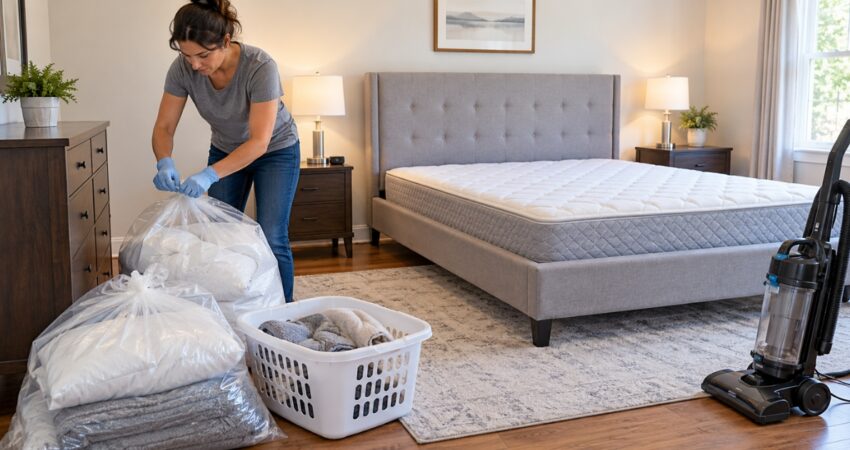
Preparing your home before a professional bed bug treatment helps pest control technicians reach the areas where insects hide. Simple steps, such as clearing clutter, washing bedding and providing access to furniture, can improve treatment results.
If you are dealing with bed bugs in London, preparing your home properly can help make professional chemical treatment more effective.
Before your bed bug treatment appointment, strip the beds, seal affected textiles in bags, wash suitable items at 60°C and clear access around furniture. Vacuum affected rooms and follow your pest controller’s preparation instructions.
You do not need to dismantle your entire home. However, the technician must be able to inspect and treat the affected areas safely.
For professional bed bug control in London, Bed Bugs East London provides targeted chemical treatments for residential and commercial properties.
Why Is Home Preparation Important Before Bed Bug Treatment?
Bed bugs hide in places that are difficult to inspect. They often shelter in bed frames, furniture joints, cracks and areas around skirting boards.
Clutter and blocked access can prevent technicians from reaching these hiding places.
Good preparation helps the pest controller:
- Access affected rooms and furniture.
- Identify possible bed bug hiding places.
- Apply chemical treatments to suitable areas.
- Reduce the chance of spreading insects between rooms.
- Carry out the treatment safely and efficiently.
The better you prepare your property, the easier it becomes for the technician to complete the planned work.Once your home is ready, you can learn more about how professional bed bug chemical treatment works and what to expect during the appointment.
Bed Bug Treatment Preparation Checklist
Before your appointment, follow these practical steps.
1. Clear the Area Around Your Bed
Start with the rooms where you have noticed bed bug activity.
Remove unnecessary items from under beds and around furniture. Keep walkways clear so the technician can inspect the room.
You should:
- Remove items stored underneath the bed.
- Clear bedside tables where requested.
- Move loose belongings away from skirting boards.
- Make bed frames and headboards accessible.
- Keep affected belongings contained.
Do not transfer potentially infested items into another bedroom. Moving them without proper containment can spread the infestation.
2. Wash Bedding and Suitable Clothing
Bedding and clothing can harbour bed bugs and eggs.
Remove sheets, pillowcases, duvet covers and affected clothing carefully. Place them directly into sealed bags before carrying them to the washing machine.
Wash suitable items at 60°C, following their care labels.
Where the fabric allows, use a hot tumble-drying cycle for at least 30 minutes.
After laundering, place clean items in fresh, sealed bags or containers. Keep them away from untreated belongings.
For delicate fabrics that cannot tolerate high temperatures, ask your pest controller about suitable alternatives.
3. Prepare Furniture for Chemical Treatment
Furniture can provide hiding places for bed bugs.
Move beds, wardrobes and other furniture away from the walls when it is safe and practical. Ask your technician how much clearance they need.
You may also need to:
- Open accessible bed storage compartments.
- Remove loose cushions from affected sofas.
- Clear items from furniture drawers.
- Make both sides of the bed frame accessible.
- Remove wall decorations if instructed.
Avoid dismantling fixed fittings or moving heavy furniture without help.
Do not remove electrical sockets, skirting boards or other permanent fixtures yourself. Your pest controller will explain whether any additional access is required.
4. Empty Wardrobes and Drawers When Requested
Bed bugs can hide inside clothing, storage compartments and furniture joints.
Your technician may ask you to empty wardrobes, bedside cabinets or drawers in affected rooms.
Place the contents in sealed bags. Keep untreated and cleaned belongings separate.
Do not leave loose clothing scattered across the room.
Some properties require more extensive preparation than others. Follow the checklist provided for your specific infestation.
5. Vacuum Affected Rooms Before Treatment
Vacuuming can remove some exposed bed bugs, eggs and debris before the chemical application.
Focus on accessible areas, including:
- Carpet edges and skirting boards.
- Bed frames and mattress seams.
- Floor corners and furniture joints.
- Areas underneath beds.
- Upholstered furniture where appropriate.
Once finished, carefully seal the vacuum contents in a plastic bag and dispose of them in an outdoor bin.
Clean the vacuum equipment as advised to reduce the risk of spreading insects.
Remember that vacuuming alone cannot reliably eliminate an established infestation.
6. Keep Infested Belongings Contained
One common mistake is moving belongings from an affected room into an unaffected part of the property.
Bed bugs can travel inside clothes, bags, bedding and other personal items.
To reduce this risk:
- Seal affected textiles before moving them.
- Keep untreated items separate from cleaned belongings.
- Avoid transferring furniture between rooms.
- Do not leave infested items in communal areas.
- Ask your technician before disposing of furniture.
Careful handling helps prevent insects from spreading throughout your home.
What Should You Avoid Before Chemical Bed Bug Treatment?
Certain actions can make professional treatment more difficult.
Avoid these common mistakes:
- Using additional insecticides: Do not apply DIY sprays or foggers before the appointment unless your technician instructs you to do so.
- Moving affected furniture: This can spread bed bugs to other rooms.
- Throwing away your mattress immediately: Professional inspection should come first.
- Ignoring preparation instructions: Blocked areas can prevent effective treatment.
- Mixing clean and untreated items: Keep them separate to reduce cross-contamination.
If you cannot complete part of the preparation, inform the pest control company before your appointment.
How Should You Prepare Children, Pets and Personal Items?
Chemical bed bug treatment requires appropriate safety precautions.
Before the technician arrives, discuss arrangements for children, pets and anyone who may need additional assistance.
Remove pets from areas scheduled for treatment as instructed.
Tell the technician if you have an aquarium or other animals that may require special precautions.
You should also:
- Secure food, utensils and personal hygiene products.
- Remove or protect children’s toys as instructed.
- Keep personal belongings away from treatment surfaces.
- Inform the technician about sensitive areas or access concerns.
Your pest controller will explain which rooms need treatment and when people and pets can safely return.
What Happens on the Day of Your Appointment?
When the technician arrives, they may inspect affected rooms and confirm the proposed treatment areas.
They will consider the infestation level, property layout and accessible hiding places.
For professional chemical treatment, the technician will apply suitable insecticides to designated areas in line with product instructions.
The technician should also explain:
- Which areas have been treated.
- How long you need to stay away.
- When you can safely re-enter the property.
- Any ventilation requirements.
- Which surfaces you should avoid cleaning.
- Whether a follow-up appointment is recommended.
If you are arranging professional bed bug extermination services in East London, ask for preparation and aftercare instructions before the appointment.
Can You Return Home Immediately After Treatment?
You should not return to treated areas until your pest controller confirms that it is safe.
The required waiting period depends on the products used, their application and the manufacturer’s safety instructions.
Some treatments require rooms to remain unoccupied until treated surfaces have dried and any specified ventilation period has passed.
Always follow your technician’s written re-entry instructions rather than assuming a fixed waiting time.
Do not touch wet treated surfaces or allow children and pets into restricted rooms.
Does Proper Preparation Guarantee Complete Bed Bug Removal?
Proper preparation can improve the effectiveness of chemical treatment, but it cannot guarantee immediate elimination.
Bed bugs may remain hidden in difficult areas, and some eggs can survive certain insecticide applications.
The infestation level, treatment coverage and follow-up plan all influence the outcome.
This is why professional pest controllers may recommend further inspection or additional treatment.
To understand the role of eggs during treatment, read our guide on how professional treatment tackles bed bug eggs.
Professional Bed Bug Treatment Preparation in East London
Whether you live in a flat, terraced house or shared accommodation, preparing your rooms helps the technician access affected areas.
Bed Bugs East London provides professional chemical bed bug treatment for residential and commercial properties across East London.
If you have booked an appointment, follow the instructions provided by your technician. These may differ depending on the property and infestation.
Need help with a bed bug infestation?
Contact Bed Bugs East London to discuss your treatment requirements and find out how to prepare your property before the visit.
Frequently Asked Questions
What should I do before the bed bug exterminator arrives?
Clear clutter, strip the beds, seal affected clothing and bedding, and provide access around furniture. Vacuum affected areas before treatment and follow your technician’s instructions.
Do I need to wash all my clothes before bed bug treatment?
You should wash affected clothing and textiles as advised. Suitable items can be washed at 60°C. Keep cleaned belongings in sealed bags to prevent further contact with bed bugs.
Should I move furniture away from the walls?
Yes, where it is safe and your technician requests it. Providing access to skirting boards, bed frames and furniture joints helps the pest controller reach potential hiding places.
Do I need to empty my wardrobe before treatment?
Your pest controller may ask you to empty wardrobes and drawers in affected rooms. The amount of preparation depends on the infestation and treatment plan.
Can I stay inside during chemical bed bug treatment?
You will normally need to leave the treated areas during application and for the required re-entry period. Follow the specific instructions given by your technician.
Should I vacuum before or after bed bug treatment?
Vacuum affected areas before the appointment, as instructed. After chemical treatment, avoid vacuuming treated surfaces until your pest controller confirms when cleaning can resume.
What happens if I cannot prepare my home properly?
Tell the pest control company before your appointment. The technician may adjust the preparation