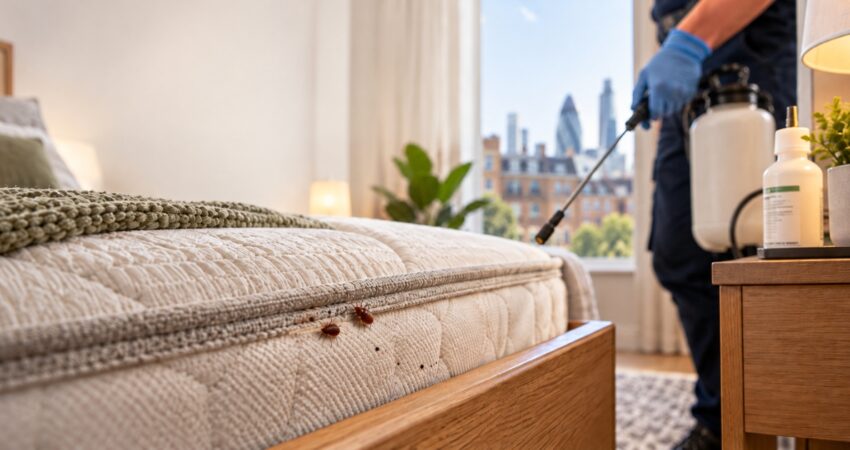
Finding live bed bugs after your first treatment can feel frustrating. You expected the problem to disappear, yet you may still notice insects near your bed or wake up with new marks on your skin.
However, seeing bed bugs after the first treatment does not always mean the treatment has failed. Some insects may remain hidden, while eggs can hatch after the initial chemical application.
The key is to monitor activity, follow your pest controller’s instructions and complete any recommended follow-up treatment.
For professional bed bug control in London, Bed Bugs East London provides targeted chemical treatments for residential and commercial properties.
Is It Normal to See Bed Bugs After the First Treatment?
Yes, some activity can continue during the first few days after chemical treatment.
Professional insecticides do not always kill every bed bug immediately. Certain products leave a residual effect on treated surfaces. This helps control insects that emerge from their hiding places after the initial application.
You may notice:
- Individual bed bugs moving around treated areas.
- Small bed bugs appearing after hidden eggs hatch.
- Occasional live insects near bed frames or furniture.
- Fewer visible insects as the treatment progresses.
These signs do not automatically indicate treatment failure.
However, continued activity requires monitoring. If you keep finding live bed bugs or notice activity spreading, contact your pest controller.
Why Might Bed Bugs Remain After Chemical Treatment?
Several factors can affect how quickly a bed bug infestation responds to treatment.
1. Hidden Bed Bugs May Avoid Initial Contact
Bed bugs often hide inside narrow cracks and furniture joints. Some insects may remain concealed during the first application.
Common hiding places include headboards, divan bases, skirting boards and upholstered furniture.
When these insects emerge, they may encounter the residual chemical treatment.
2. Eggs May Hatch After Treatment
Some bed bug eggs survive the initial insecticide application. Newly hatched insects can then appear over the following days.
This is one reason pest controllers may recommend further treatment.
For a more detailed explanation, read our guide on how professional treatment tackles bed bug eggs.
3. Some Areas May Need Further Attention
Furniture, clutter and inaccessible spaces can make an infestation harder to control.
A thorough inspection helps identify affected areas. Your pest controller can then decide whether additional chemical application is necessary.
4. Cleaning Can Disrupt Residual Treatment
Cleaning treated surfaces too soon may reduce the insecticide’s effectiveness.
Avoid washing or vacuuming treated areas until your technician confirms when it is safe to do so. Follow the instructions for the specific products used in your property.
What Should You Expect During the First Two Weeks?
The period after chemical treatment is important for monitoring progress.
First 24–48 Hours
You may still notice some live bed bugs. Residual insecticides can take time to affect insects that move across treated surfaces.
Do not assume the treatment has failed simply because you spot a bed bug.
Days 3–7
You may begin to see fewer live insects. However, hidden bed bugs can remain active, and some eggs may hatch.
Keep a record of where you find insects and how often you see them.
Days 7–14
Your pest controller may recommend a follow-up inspection or treatment around this period.
The exact schedule depends on the insecticide, infestation level and professional assessment.
Important: This timeline is a general guide, not a guarantee. Some infestations take longer to control.
What Should You Do After the First Bed Bug Treatment?
Your actions after treatment can influence the results.
Follow these practical steps:
- Respect re-entry instructions. Keep people and pets away from treated areas for the period specified by your technician.
- Protect treated surfaces. Do not remove residual insecticides through premature cleaning.
- Monitor bed bug activity. Record live sightings and note which rooms remain affected.
- Avoid additional sprays. Do not apply shop-bought insecticides between professional visits unless your technician approves.
- Keep belongings contained. Avoid moving potentially infested items into unaffected rooms.
- Complete follow-up appointments. Further inspection or treatment may be essential for lasting control.
Always follow the written aftercare instructions provided by your pest control company.
How Do You Know If the Treatment Is Working?
A successful treatment should lead to a sustained reduction in bed bug activity.
Positive signs may include:
- Fewer live bed bug sightings.
- Reduced evidence of fresh bed bug activity.
- No new faecal spots or shed skins.
- No live insects found during follow-up inspections.
Remember that skin reactions alone cannot confirm an active infestation. Bite marks may appear later, and other insects or skin conditions can cause similar symptoms.
Look for physical evidence rather than relying only on bites.
If activity continues or increases, arrange a professional assessment.
When Should You Arrange Another Treatment?
You should follow the treatment schedule recommended by your pest controller.
A second visit may help control insects that survived the initial application or emerged from hidden eggs.
Some properties require additional visits, especially when an infestation affects several rooms or involves difficult hiding places.
Professional bed bug extermination services should focus on treating the full infestation rather than providing a single surface spray.
If you would like to understand the treatment process, explore our guide to professional bed bug chemical treatment in East London.
Chemical Bed Bug Treatment in East London
Bed bug infestations can be particularly challenging in flats, shared accommodation and properties with adjoining rooms.
Bed Bugs East London provides professional chemical treatment for affected residential and commercial properties.
Our approach focuses on identifying bed bug activity, applying suitable chemical treatment and providing guidance on the next steps.
If you have already attempted treatment and still notice live insects, a professional assessment can help identify why the infestation continues.
You can also read our guide to choosing a bed bug specialist before arranging an appointment.
Final Thoughts
Seeing bed bugs after the first treatment does not necessarily mean you need to start again.
Some insects may survive temporarily, while others can emerge from hidden eggs. Proper monitoring and timely follow-up treatment help address these remaining stages.
Avoid interfering with treated surfaces and contact your pest controller if the infestation shows no clear improvement.
Still dealing with bed bugs in East London?
Contact Bed Bugs East London to discuss professional chemical treatment and the next steps for your property.
Frequently Asked Questions
Can bed bugs survive the first chemical treatment?
Yes. Some bed bugs may remain hidden or avoid contact with treated surfaces. Others may hatch from eggs after the initial application.
How long will I see bed bugs after treatment?
You may notice activity for several days or longer. The timeline depends on the infestation, insecticide and treatment plan. Contact your pest controller if activity persists or increases.
Do bed bugs come out more after spraying?
You may notice insects moving from hiding places after treatment. However, increased sightings alone do not prove that the chemicals are working.
Do I always need a second bed bug treatment?
Not every infestation follows the same schedule. Professional treatment plans commonly include follow-up visits, with further chemical application when necessary.
Can I vacuum after bed bug chemical treatment?
Avoid vacuuming treated surfaces until your pest controller advises you to do so. Cleaning too early can remove residual insecticide and reduce its effectiveness.
What if I still find bed bugs after two treatments?
Contact your pest control company for another assessment. Remaining insects, untreated hiding places, insecticide resistance or reinfestation may explain continued activity.